
Hail Damage Roof Repair in Cincinnati — What Homeowners Need to Know
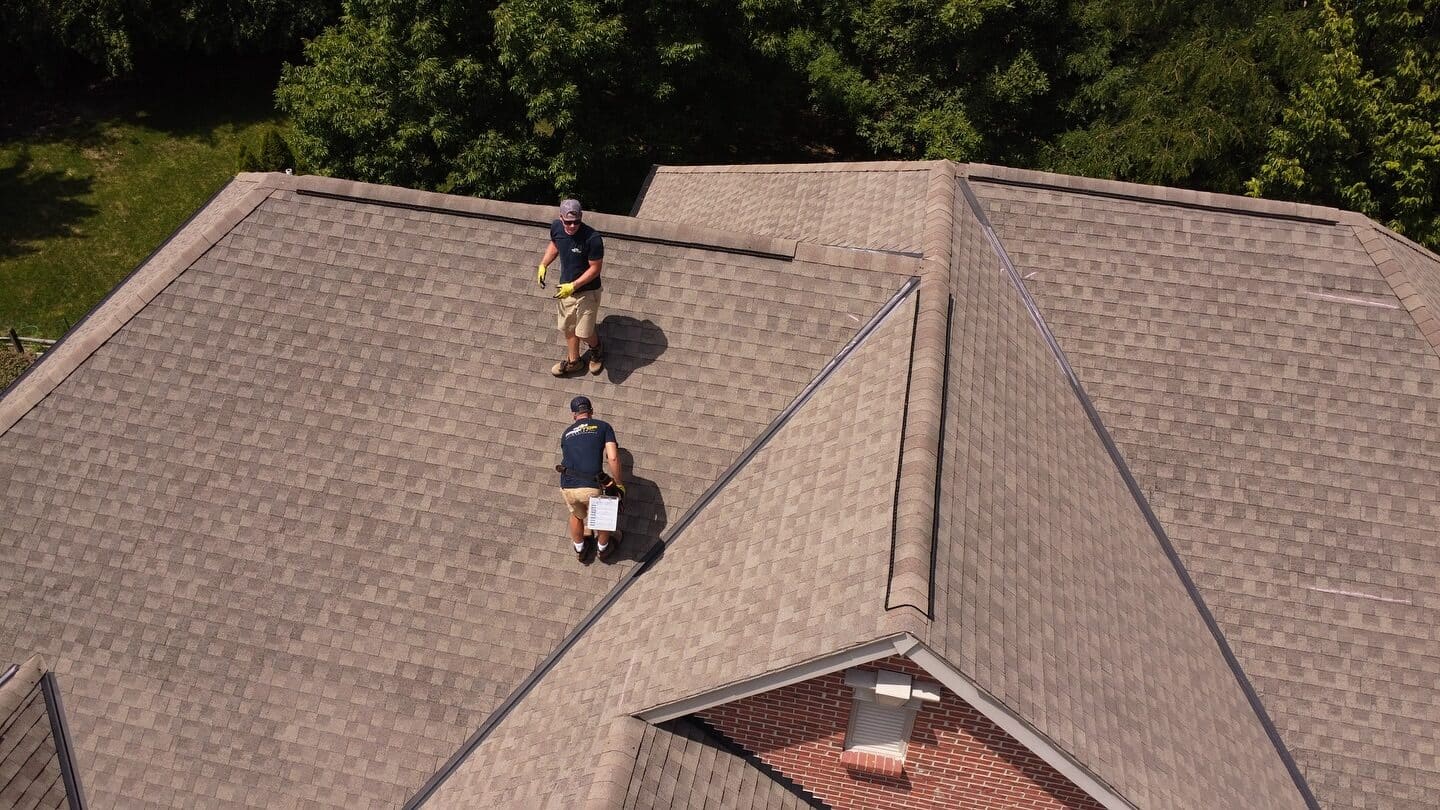
Cincinnati sits in one of the most active spring storm corridors in the Midwest. Every year from April through August, hail events move through Hamilton, Butler, Warren, and Clermont counties — and every year thousands of homeowners end up with roof damage they don't know about until weeks later, when the ceiling stain appears or a random shingle shows up in the yard.
Here's the problem: most hail damage isn't visible from the ground.
You can have a roof full of hail impact marks that compromise the granule layer, shorten the lifespan of every shingle by years, and create invisible pathways for water — and from the driveway it looks fine.
That's why Cincinnati sees so many "delayed damage" insurance claims, and why so many legitimate claims get denied because the filing window closed before anyone knew to look.
This post covers what hail damage actually looks like, how the insurance claims process works in Ohio, and what to do right now if you think your roof might have been hit in a recent storm.
How to Tell If Your Cincinnati Roof Has Hail Damage
There are two categories of evidence: ground-level indicators you can see without getting on the roof, and on-roof evidence that requires a professional.
You can have a roof full of hail impact marks — granules stripped, shingles bruised, lifespan cut by years — and from the driveway it looks fine. That's why Cincinnati sees so many delayed-damage claims.
Ground-Level Indicators
These are the signs a homeowner can check themselves after a storm:
- Dents in gutters, downspouts, and metal flashing. This is the most reliable ground-level indicator. Aluminum gutters dent easily, and those dents are proof that hail of significant size hit your property. If your gutters are dinged up, your roof took the same hits.
- Damage to other exterior surfaces. Dented mailboxes, damaged AC units, bruised paint on wood decks, cracked siding panels, or dented garage doors. If the rest of your property took impact, the roof did too.
- Shingle debris or loose granules. Check your gutters and at the bottom of downspouts for heavy granule accumulation — little black-gray sand-like particles. That's your roof's protective coating coming off, and a recent storm can strip a lot of it in one event.
- Missing or displaced shingles. Any shingle that's lifted, torn, or missing from the roof is visible from the ground if you walk around your house and look up at each slope.
- New ceiling stains. Any new discoloration on interior ceilings that appeared after a storm is water infiltration until proven otherwise.
On-Roof Evidence (What a Professional Looks For)
This is what requires a professional inspection:
- Circular impact marks on shingles. Hail creates round impressions where granules have been knocked off, exposing the dark asphalt layer underneath. These marks are typically 1/4 to 1 inch in diameter, concentrated on the slopes most exposed to the storm direction.
- Bruised shingles. Some hail impact doesn't visibly break the granule surface but creates a soft spot where the fiberglass mat underneath has been compromised. These bruises dramatically shorten shingle lifespan even though they look normal.
- Granule loss patterns. Professionals compare granule density across different slopes. Normal wear is uniform. Hail damage creates patterned loss concentrated on specific exposures.
- Flashing displacement. Chimney, valley, and pipe boot flashing bent or shifted by wind or hail impact.
- Ridge cap damage. The shingles at the peak of your roof take the most direct hail exposure. Damage here is often the first indicator.

Why Hail Damage Gets Missed (and Why It Matters)
Most Cincinnati homeowners miss hail damage for three reasons:
- The damage is genuinely invisible from the ground. Circular impact marks on shingles look like shadows or normal texture unless you're on the roof looking closely. A homeowner standing in the driveway has no chance of seeing it.
- There's no immediate leak. Hail strips granules and bruises shingles, creating weak spots that fail over months or years — not within 24 hours. Homeowners see no water, assume everything's fine, and move on.
- The filing window closes. Most Ohio policies require storm damage claims to be filed within one year of the event, and some are shorter. By the time a ceiling stain shows up two years later, the window is closed and the claim is dead.
That's why a FREE professional inspection after any significant storm matters.
It costs you nothing, documents any damage while it's fresh, and gives you the evidence you need to file a claim while the window is still open.
How the Insurance Claims Process Actually Works in Ohio
Here's the step-by-step of what happens when you file a roof insurance claim in Ohio.
Step 1 — Professional Inspection and Documentation
Before you call your insurance company, get a FREE inspection from a qualified roofing contractor.
This does two things: it confirms there's actually damage worth claiming, and it produces the photo documentation and written assessment that will support the claim.
Filing without documentation puts the adjuster's word against nothing — and the adjuster's job is to minimize the payout.
Step 2 — File the Claim
Call your insurance company or file online through their portal. Provide the date of the storm, a description of the damage, and any documentation you've gathered.
Keep a record of the claim number and who you spoke with. Don't wait weeks after the storm.
Step 3 — Adjuster Inspection
The insurance company will assign an adjuster to inspect your property. This is the most important part of the process.
Have your roofing contractor on site during the adjuster inspection — this is standard practice and your right as a policyholder.
The contractor can point out damage the adjuster might miss, push back on classifications that minimize the claim, and make sure the scope is accurately recorded.
Step 4 — Damage Classification and Scope
The adjuster writes up the claim with a scope of work and a payout estimate. This is where a lot of legitimate claims go sideways.
An adjuster might classify a full-roof hail event as "partial damage" and authorize only a slope replacement. They might miss flashing or ridge cap damage entirely, or assign depreciation that reduces your payout.
Rooftop Relief reviews every adjuster scope before you accept it. If items are missing or misclassified, we push for a supplement — additional items added to the original claim.
Supplements are normal and legitimate. They're how the insurance process corrects adjuster oversights.
Step 5 — Payout and Repair
Once the claim is approved, you typically receive two payments: the initial "actual cash value" (ACV), and the "recoverable depreciation" after the work is completed and invoiced.
Your deductible is subtracted from the first payment. We coordinate with your insurance company on the paperwork so the depreciation release happens without you having to chase it.

What Counts as Storm Damage vs Normal Wear
This is the distinction that determines whether your claim gets approved or denied.
Insurance covers sudden damage events — hail, wind, fallen trees, debris impact. It does not cover normal aging — shingles wearing out over years, granules slowly washing off in rain, sealant gradually failing.
The evidence that separates the two:
- Pattern. Hail damage is concentrated on slopes exposed to the storm direction — not uniform across the roof. Normal wear is even.
- Impact marks. Circular impressions or bruises from a specific moment of impact. Normal wear doesn't create these.
- Wind damage indicators. Lifted shingle tabs, displaced ridge cap, missing shingles in specific areas — evidence of a wind event. Normal aging doesn't lift shingles.
- Timeline. Damage that appeared or worsened around a documented storm event. Weather data from the day in question supports this.
A professional storm damage inspection documents all of this — photos, measurements, weather data, damage patterns — so there's no argument when the adjuster reviews it.
What Hail Damage Roof Repair Costs in Cincinnati
When hail damage is covered by insurance, your out-of-pocket cost is your deductible — not the full repair cost.
Most homeowner's policies in Ohio have deductibles between $1,000 and $2,500.
For context on the full costs insurance is covering:
- Minor hail damage repair (isolated shingle replacement, flashing repair): $500–$2,500
- Single slope replacement (when damage is concentrated on one exposure): $3,500–$7,500
- Full roof replacement (most common outcome for significant hail events): $8,500–$16,500 for a standard Cincinnati home
Older homes in neighborhoods like Hyde Park and Mariemont with steep pitches and complex rooflines run higher.
Newer construction in Mason, West Chester, and Liberty Township falls in the mid-range. See our full breakdown in How Much Does a Roof Replacement Cost in Cincinnati in 2025.
What To Do Right Now If You Think Your Roof Has Hail Damage
If there was a significant hail event in your area anytime in the past 12 months and you haven't had a professional inspection, do this in order:
- Check your gutters and downspouts for dents. Five minutes, no ladder needed. If you see dents, that's your first piece of evidence.
- Walk around your house and look up at each roof slope. Note any visibly damaged, missing, or lifted shingles.
- Check your ceilings and attic for any new water stains. Any new staining that appeared after a storm needs attention.
- Schedule a FREE roof inspection. We'll document everything professionally and tell you whether you have a legitimate claim — before you call the insurance company.
- If damage is found, file the claim immediately. The filing window is time-sensitive and the longer you wait, the harder the claim becomes to prove.
Common Mistakes That Kill Hail Damage Claims
- Waiting too long to file. Every month that passes makes it harder to tie damage to a specific storm event. Ohio policies typically have one-year filing windows — and some are shorter.
- Hiring a storm chaser. After major hail events, out-of-state contractors flood Cincinnati offering "FREE inspections." Many disappear after the work is done, leaving homeowners with warranty issues nobody will honor. Stick with local contractors who were here before the storm and will be here next year.
- Accepting the first adjuster scope without review. Adjusters miss damage regularly — not maliciously, just because they're working fast. A contractor reviewing the scope and pushing for supplements is how legitimate items get added back to the claim.
- Letting the insurance company dictate the contractor. Your insurance company may "recommend" a preferred contractor. You are not obligated to use them — you have the right to choose your own roofing contractor for any insured repair work in Ohio.
- Signing AOB (Assignment of Benefits) paperwork without understanding it. Some contractors ask homeowners to sign over their insurance benefits, transferring control of the claim. Read any contract before signing — if something looks like it gives the contractor authority over your payout, ask questions.
The Bottom Line
Cincinnati gets hail. Every year.
Most homeowners don't realize they have damage until well after the filing window has closed. The move is to get a FREE inspection after any significant storm event, document everything while it's fresh, and file the claim while you still have time.
Rooftop Relief handles the full process from inspection through adjuster communication through repair — for homeowners across Cincinnati, Loveland, West Chester, Mason, Anderson Township, Milford, Hyde Park, Oakley, Blue Ash, Mariemont, Montgomery, Liberty Township, Indian Hill, and the surrounding area.
If you think your roof might have been hit in a recent storm, contact us or call (513) 560-1181 for a FREE inspection.
The inspection is FREE regardless of what we find. If there's a legitimate claim, we'll walk you through the full process. If there's no damage, you'll know that too.